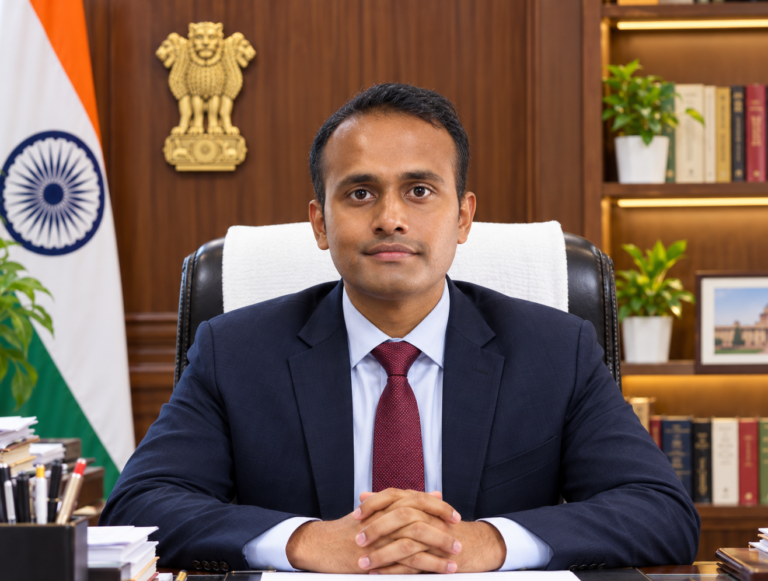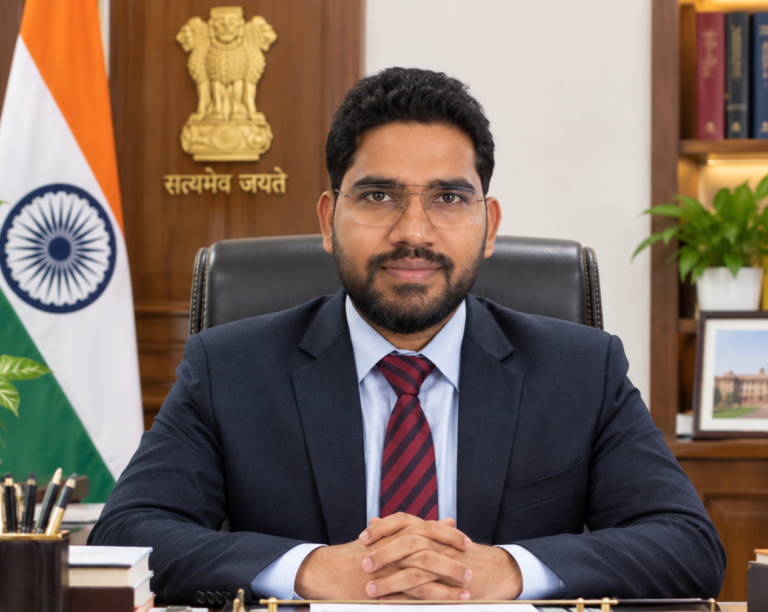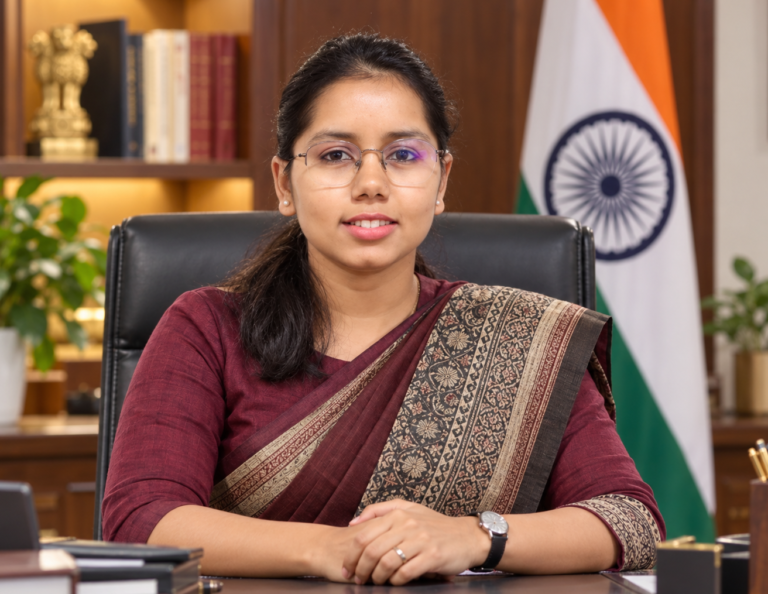
Smt. Simala Prasad, a distinguished officer of the 2011 batch of the Indian Police Service (IPS), is widely celebrated in Madhya Pradesh as a “Renaissance Officer.” Known for her unique blend of administrative grit, academic brilliance, and artistic sensitivity, she has redefined the image of a modern police commander. Her journey from the prestigious corridors of academic excellence to the frontlines of district policing reflects a multifaceted commitment to public service and cultural enrichment, aligning with the state’s vision of progressive transformation.
Professional Genesis and Academic Excellence
Smt. Simala Prasad’s foundation is rooted in a legacy of service and intellectual pursuit. The daughter of the eminent Dr. Bhagirath Prasad (a former IAS officer and Member of Parliament), she inherited a deep-seated desire to contribute to society. She pursued her post-graduation in Sociology from Barkatullah University, Bhopal, where she was a gold medalist, followed by successful completion of the NET exam. Her entry into the IPS in 2011 marked the beginning of a career characterized by an empathetic approach to law enforcement and a focus on social justice.
Leadership in the Field: Empathetic and Decisive
Throughout her career as Superintendent of Police (SP) in districts such as Betul and Narmadapuram, Smt. Prasad earned the moniker of a “people’s officer.” Her leadership style is defined by:
- Community Engagement: She is known for her “open-door” policy, ensuring that the most vulnerable citizens have direct access to justice.
- Operational Integrity: In Betul, she was instrumental in streamlining police response times and modernizing the district’s surveillance capabilities to curb illegal mining and local crime.
- Women’s Safety: Championing the cause of female empowerment, she has implemented several initiatives to make public spaces safer and to encourage women to report grievances without fear.
The Artistic Soul: From Poetry to Cinema
What truly sets Smt. Simala Prasad apart is her celebrated career as an artist and writer. She is a noted poetess whose verses often reflect the complexities of human emotion and the realities of social service. Beyond literature, she has left an indelible mark on Indian cinema:
- Film Debut: She made her acting debut in the critically acclaimed film Alif (2017), which explored themes of education and social change.
- Cultural Ambassadorship: Her performance in films like Nakkash showcased her ability to balance the rigors of her high-pressure job with a profound creative outlet.
- Creative Philosophy: She views art not as a distraction, but as a medium to better understand the human condition, which in turn makes her a more compassionate and effective police officer.
Strategic Leadership and Institutional Vision
Following her successful district tenures, Smt. Prasad has transitioned into senior strategic roles within the state’s administrative framework. In the recent administrative reshuffles of May 2026, her expertise has been utilized at the Police Headquarters (PHQ) and in specialized regional commands. Her focus remains on:
- Institutional Reform: Aligning police training and recruitment with the state’s broader goals of transparency and inclusive development.
- Progressive Governance: Integrating human-centric values into standard operating procedures to foster an environment where every citizen can thrive.
A Visionary Outlook
Smt. Simala Prasad’s approach to policing is a testament to the belief that the “Khaki” can be both a shield for the innocent and a canvas for the soul. She envisions a future where the police force is characterized by its intellectual depth and its ability to communicate with the public through both law and art. Her leadership continues to inspire a new generation of officers to pursue excellence without losing their humanity.
Why is she one of the ‘Stars of MP’?
Smt. Simala Prasad is a ‘Star of MP’ because she embodies the “Progressive Transformation” of Madhya Pradesh. She has broken stereotypes, proving that a top-tier IPS officer can also be a gold medalist, a poetess, and a film actress. Her journey from the rural heartlands of Betul to the silver screen and the strategic offices of the PHQ is a source of immense pride for the state. By bridging the gap between law enforcement and cultural expression, she has set a benchmark for a holistic and empathetic model of public service.
About the Author