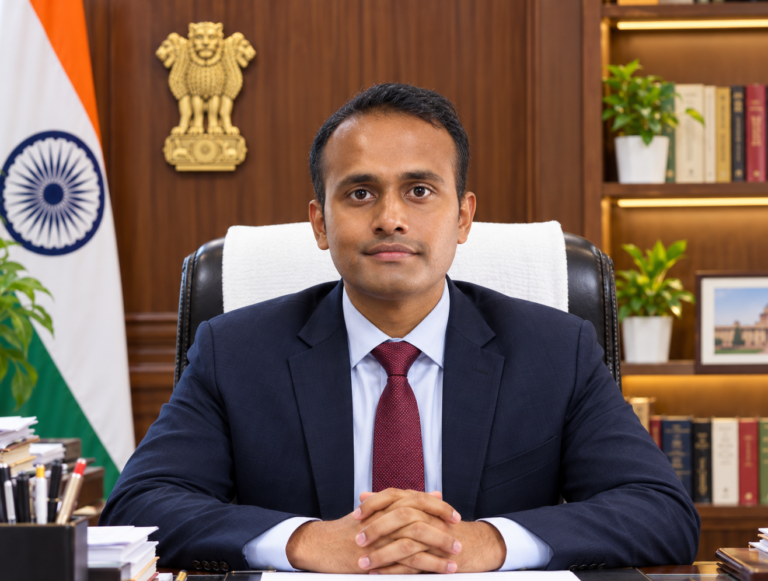
Shri Mohit Bundas, a distinguished member of the 2011 batch of the Indian Administrative Service (IAS), epitomizes the modern, proactive bureaucrat whose leadership is rooted in empathy, efficiency, and a deep-seated commitment to public service. His journey in the Madhya Pradesh cadre is marked by a series of high-impact roles where he has consistently championed the cause of the common citizen, particularly the farming community and the rural populace.
Early Life and Academic Foundation
Shri Mohit Bundas entered the prestigious civil services with a robust academic background and a vision to contribute to India’s developmental story. His disciplined approach to governance and his ability to analyze complex administrative challenges can be traced back to his rigorous preparation and academic excellence, which have served as a solid foundation for his multifaceted career in the state of Madhya Pradesh.
Administrative Genesis and Ascendancy
Since his induction into the IAS, Shri Bundas has held several pivotal positions that have tested and proven his administrative mettle. His rise through the ranks has been characterized by a hands-on approach and a reputation for being a “people’s officer.” Whether serving as a District Collector or in state-level leadership roles, his tenure has been defined by a relentless focus on transparency and the effective delivery of government schemes.
Transformative Leadership: A Vision for Progress
Assuming various critical offices, Shri Bundas has embarked on a mission to propel Madhya Pradesh towards holistic development, mirroring the state’s broader vision for transformation. His key areas of impact include:
1. Revolutionizing Agricultural Marketing
During his tenure as the Managing Director of the Madhya Pradesh State Agricultural Marketing Board (Mandi Board), Shri Bundas focused on modernizing the state’s mandi infrastructure. He spearheaded initiatives to digitize trade processes, ensuring that farmers receive fair prices for their produce and that the system remains transparent and free from exploitation.
2. District Administration and Public Redressal
As the Collector of Chhatarpur, he was widely praised for his “Sarkar Aapke Dwar” (Government at your Doorstep) approach. He frequently conducted field visits to remote villages to ensure that the grievances of the marginalized were heard and addressed on the spot, significantly improving the responsiveness of the local administration.
3. Urban Planning and Infrastructure
In his roles within departments like Town and Country Planning, he has focused on sustainable urban development. His vision includes creating smart, self-sufficient urban spaces that can accommodate the growing needs of the population while maintaining environmental balance.
4. Technological Integration
Embracing the digital age, Shri Bundas has consistently integrated technology into governance. From implementing e-mandi systems to streamlining administrative workflows, his efforts have aimed at promoting transparency, efficiency, and real-time citizen engagement.
5. Social Welfare and Empowerment
He has been a strong advocate for women’s empowerment and child welfare, ensuring that social safety nets are robust and accessible. His administration has often prioritized the health and education sectors, viewing them as the primary drivers of long-term social change.
A Visionary Outlook
Shri Mohit Bundas’s tenure is characterized by a forward-looking approach that aligns with the vision of making Madhya Pradesh a model state. His multifaceted strategies encompass economic growth, social welfare, and technological advancement. Under his leadership, the departments he steers are poised to achieve unprecedented milestones, fostering an environment where every citizen can thrive.
Why is he one of the ‘Stars of MP’?
Shri Mohit Bundas’s journey from a dedicated young officer to a seasoned administrator is a testament to his resilience, vision, and commitment to public service. His leadership continues to inspire progress, unity, and prosperity in the state, setting a benchmark for empathetic and efficient governance. By bridging the gap between the administration and the public, he has become a symbol of trust and a true architect of the state’s progressive transformation.
About the Author