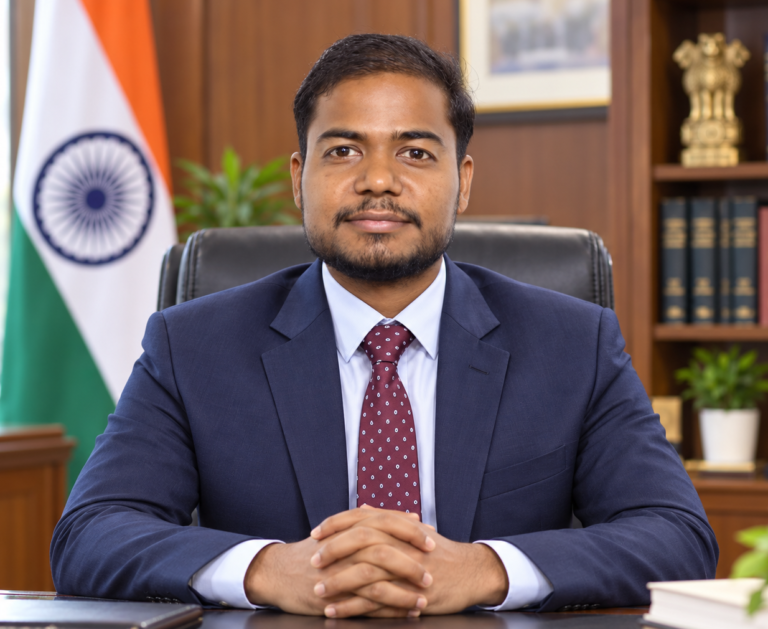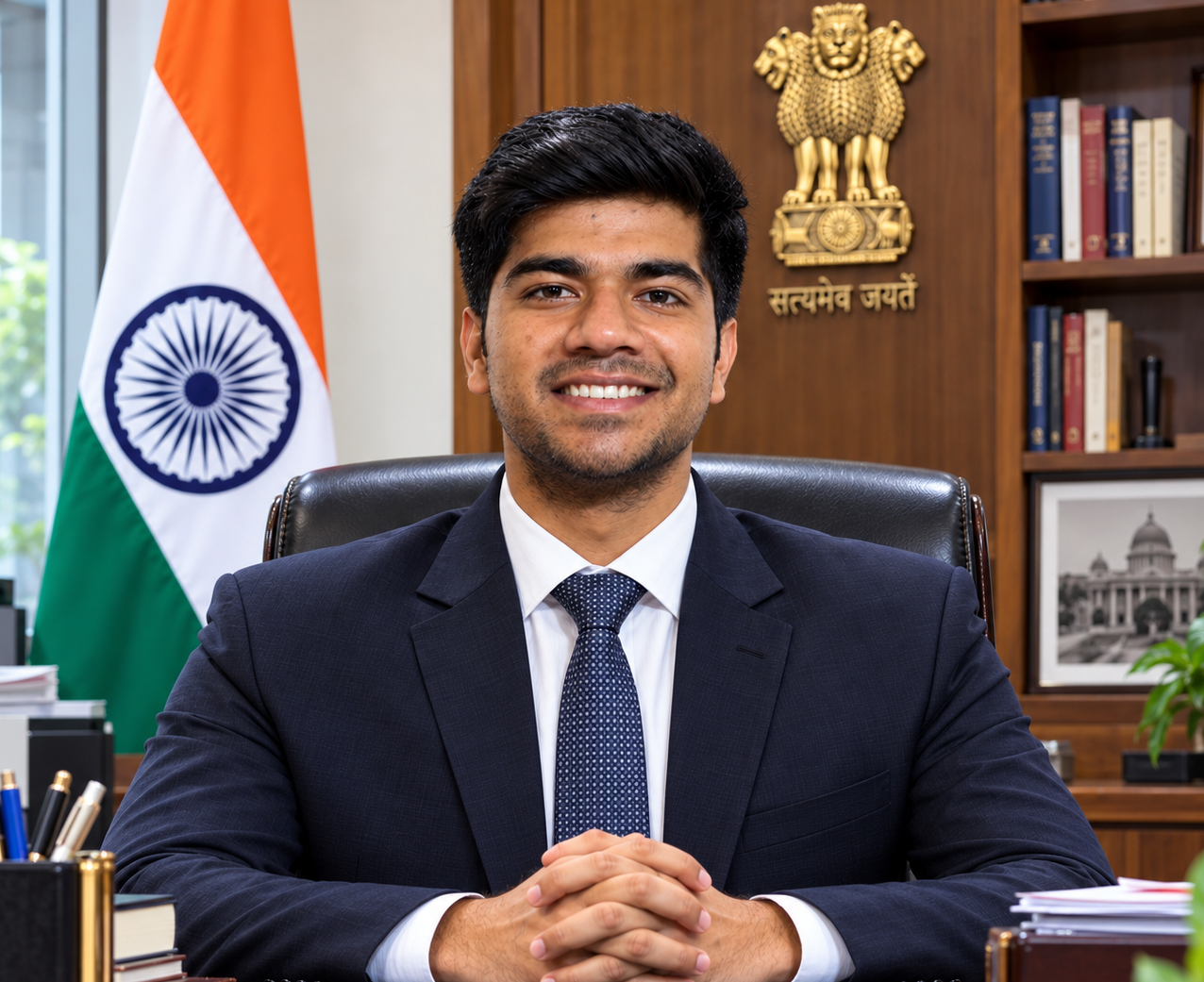
Shri Shubham Kumar Yadav, a 2023-batch Indian Administrative Service (IAS) officer of the Madhya Pradesh cadre, has undertaken responsibilities in district administration, agricultural welfare, and public service delivery. Born on August 16, 1999, in Madhya Pradesh, he joined the IAS on August 1, 2023. Currently serving as Sub-Divisional Magistrate (SDM), Parasia, Chhindwara, he oversees revenue administration, civic coordination, and essential public services.
Early Life and Academic Pursuits
Originally from Shivpuri, Madhya Pradesh, Shri Yadav pursued a B.Sc. (Honours) in Mathematics from Hansraj College, University of Delhi. His academic training in calculus, algebra, and mathematical analysis strengthened his analytical reasoning and problem-solving abilities. With focused preparation, he secured All India Rank 263 in UPSC CSE 2022, achieving his ambition of entering the Indian Administrative Service. His academic journey reflects intellectual discipline and a strong foundation for public administration.
Professional Genesis and Ascendancy
Shri Yadav began his administrative career as Assistant Collector in Narsinghpur in April 2024, gaining experience in revenue management, district governance, and public welfare administration. In July 2025, he assumed charge as SDM, Parasia, Chhindwara, expanding his responsibilities in local governance, grievance redressal, and regulatory coordination. These assignments have provided opportunities to address community concerns while strengthening the implementation of government programmes.
Administrative Tenure: Advancing Public Welfare and Administrative Accountability
Shri Yadav’s administrative work emphasizes accessible public services, effective departmental coordination, and protection of citizens’ interests. His initiatives span agricultural support, consumer safety, community engagement, and grassroots service delivery.
1. Agricultural Welfare and Digital Governance
In Parasia, Shri Yadav chaired a training programme on the e-Vikas digital fertilizer distribution system, aimed at making fertilizer availability more transparent and convenient for farmers. By facilitating coordination among agricultural officials, cooperative societies, and distributors, he supported the adoption of technology-enabled agricultural services.
2. Food Safety and Consumer Protection
Shri Yadav guided a joint enforcement drive involving revenue and food safety officials to address the sale of expired beverages and unauthorized packaged drinking water. The inspections reinforced food safety standards, regulatory compliance, and the importance of protecting consumers from potentially unsafe products.
3. Community Engagement and Grievance Redressal
Shri Yadav demonstrated direct administrative engagement through visits to rural communities, including Sahpani village, to examine land-related grievances and hear local concerns. By facilitating dialogue among residents and coordinating with revenue and police officials, he emphasized fair procedures, community communication, and responsive local administration.
4. Public Service Monitoring and Community Welfare
Under the Mukhyamantri Jan Vishwas Abhiyan, Shri Yadav participated in village-level public outreach and inspections of government institutions in Parasia. His involvement in reviewing Anganwadi facilities, essential amenities, and welfare programme implementation reflected an emphasis on improving service accessibility and institutional accountability.
A Visionary Outlook
Shri Shubham Kumar Yadav’s administrative outlook draws upon his mathematical education and practical experience in district governance. His work in agricultural digitization, consumer protection, public grievance redressal, and institutional monitoring reflects the value of combining analytical thinking with field-level engagement. Through these responsibilities, he contributes to efforts aimed at strengthening transparent, accessible, and development-oriented administration in Madhya Pradesh.
Why is he one of the ‘Stars of MP’?
Shri Shubham Kumar Yadav’s journey from Shivpuri to the Indian Administrative Service reflects academic commitment and purposeful ambition. His involvement in modernizing agricultural services, strengthening consumer safeguards, addressing community concerns, and monitoring public institutions highlights his growing administrative experience. With an emphasis on public welfare, procedural accountability, and practical solutions, he represents an emerging generation of civil servants contributing to more responsive governance in Madhya Pradesh.
About the Author